
Meghan Kelly
Peat moss has become a staple ingredient in most commercial seedling mixes, though its extraction harms boglands, which are important ecosystems and major carbon sinks.
So, can we make our own homemade veganic mixes that are totally peat-free?
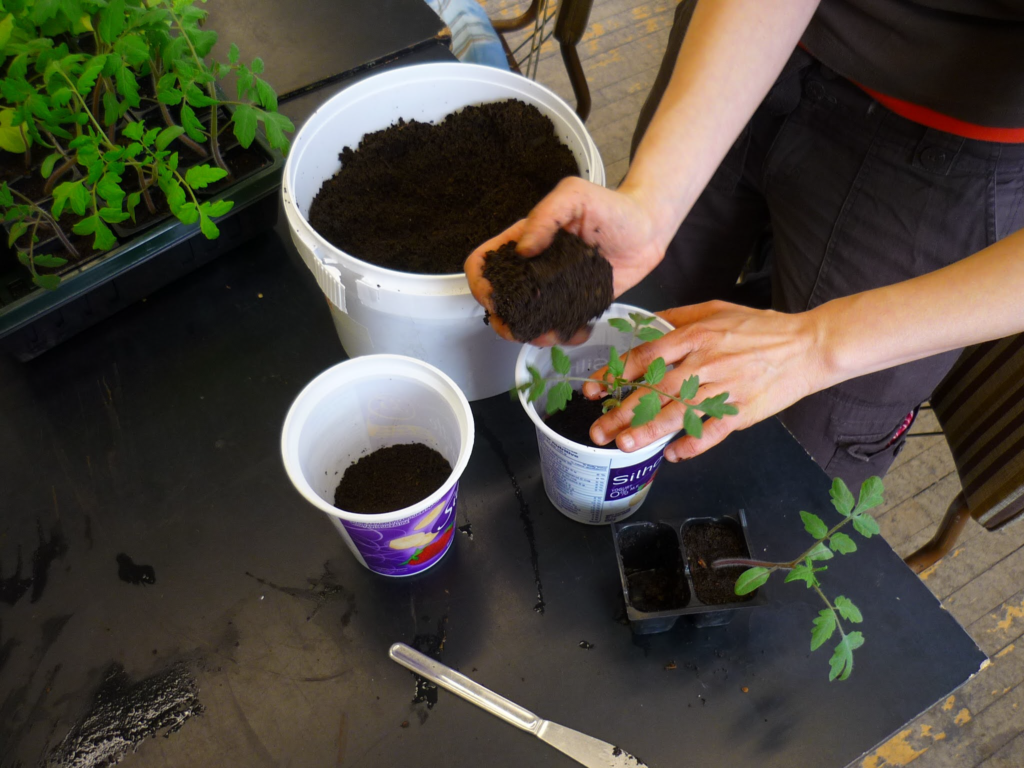
As I pondered that question several years ago, I had a happy accident. At the time, I was teaching ecological gardening courses for a non-profit called Craque-Bitume, and I enjoyed showing my students examples of materials, like chipped branch wood. I decided to think ahead: one summer, I put some chipped branch wood in a bag, and let the bag sit in a corner indoors until the next gardening course started. Six months later, when I opened the bag, much to my surprise, it no longer contained chipped branch wood: it contained a fully decomposed soil-like substance that was clearly teeming with little organisms.
Mycelium Help

However, this wasn’t any old chipped branch wood. We live in Quebec City, Canada, the region where chipped branch wood was originally discovered and researched. And the chipped branch wood I purchased from Jacques Hebert, a local expert, was inoculated with mycelium and bacteria, and had already started its decomposition process. So it definitely had a head start, and the cozy indoor storage sped up the decomposition process even more.
Personally, I was thrilled: I had accidentally turned branches into “dirt” right before the seedling season was starting. And Craque-Bitume had a composting program, through which I tracked down some fully decomposed leaf mould that was accidentally created at the bottom of enormous piles of leaves in garbage bags.
I suddenly found myself with three veganic materials at hand: veggie compost, leaf mould, and decomposed chipped branch wood. And so the experiments began, in the quest for a local eco-friendly veganic peat-free seedling mix.
We started by comparing kale, lettuce, and tomato seedlings grown in 7 different homemade seedling mixes, which contained different combinations of compost, leaf mould, and decomposed chipped branch wood. One mix also contained sand. And we also bought a commercial peat-based seedling mix to compare.

Here’s a summary of what we observed:
- All the plants grew quite well in a mix of 1/3 compost, 1/3 leaf mould, and 1/3 decomposed chipped branch wood (#6). It was the winning mix for kale, tomatoes, and lettuce.
- The kale grew okay with 100% chipped branch wood (#1) and somewhat better with a mix of chipped branch wood and compost (#2 and #4), but the lettuce and tomatoes weren’t happy and showed nutrient deficiencies.
- Using only leaf mould and compost (#3 and #5) was a total flop for kale, and mediocre for tomatoes and lettuce.
- Adding 33% sand to a mix was way too much sand (#7), and the commercial peat-based seedling mix we purchased wasn’t too impressive (#8).
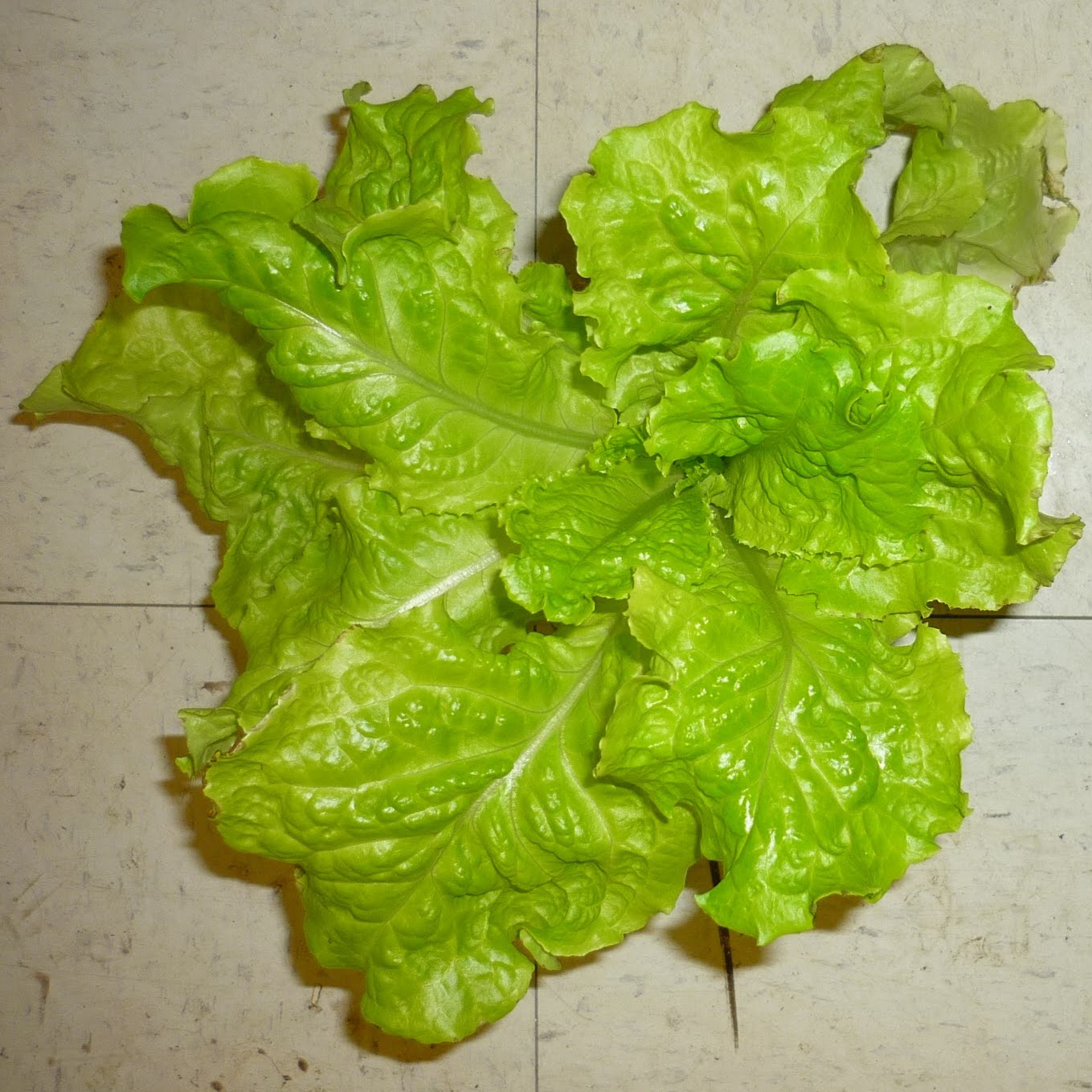 | 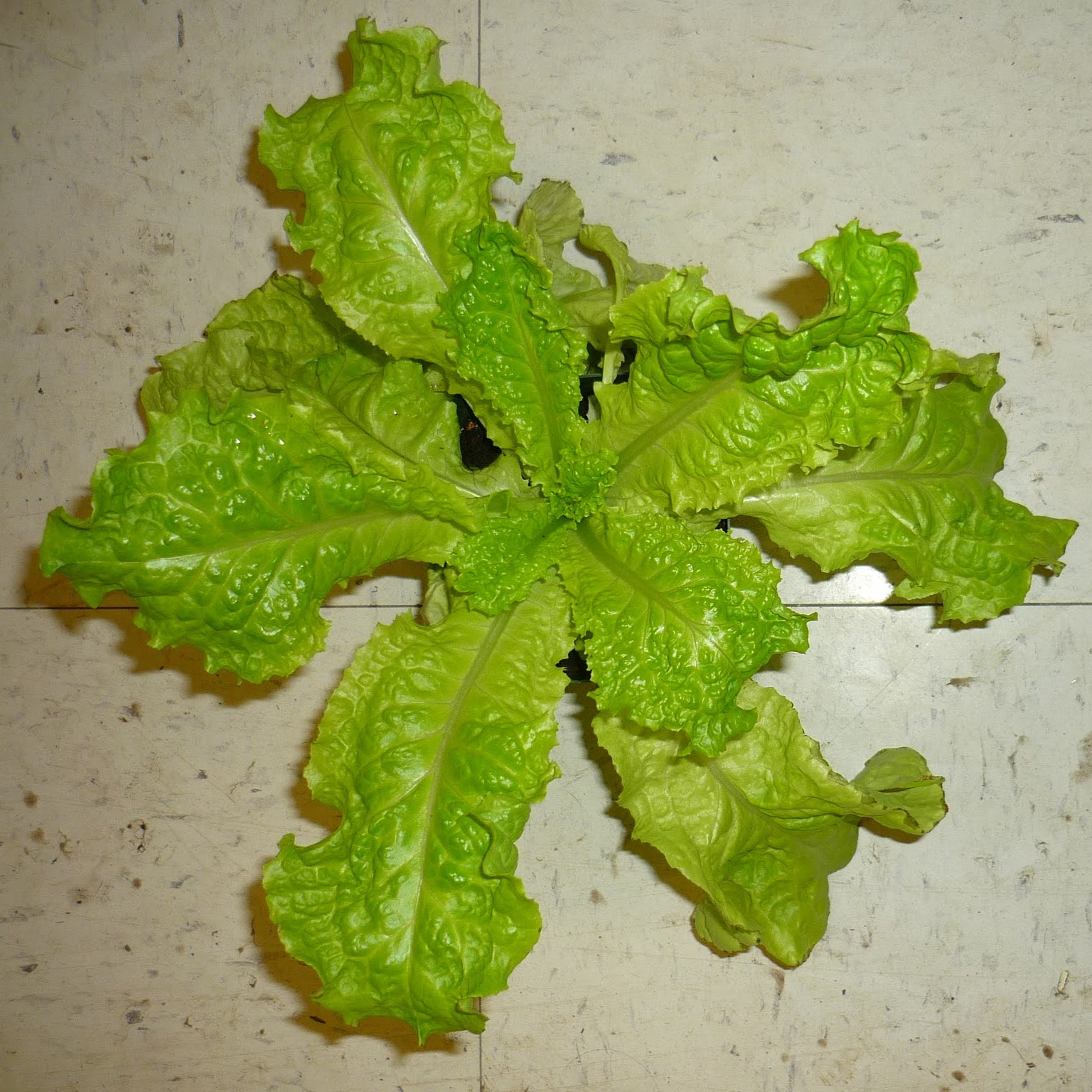 |  |
| ⅓leaf mould, ⅓cbw, ⅓ compost | ⅔leaf mould, ⅓compost | 100% chipped branch wood |
Armed with the knowledge that decomposed chipped branch wood, leaf mould, and compost is a good combo when all three are mixed, the next year we did a followup experiment, mixing those three ingredients in different ratios. What we learned: the ratio isn’t too important. Mixing them in equal quantities works fine.
But it also works fine to have a mix with 50% of any one ingredient, and 25% for each of the other two
ingredients. We observed slight differences, but nothing big.

To take things a step further, we decided to see if we could use this same mix to grow veggies all season long in pots outdoors. It worked, no problem.
By this time, I was ramping up production of all three ingredients in big backyard compost bins, always
planning a year or two in advance to give the materials enough time to decompose. I decided to create an entire raised-bed garden outdoors using the winning mix of compost, leaf mould, and decomposed chipped branch wood. For the past four years, I’ve been happily gardening using this homemade soil as a base, and topping it up each year with mulch, chop ‘n drop, and a little homemade compost.

A twist in the tale
But every story has a sad twist, doesn’t it? Last year, I decided to bring a bunch of newly-made mix indoors to grow some houseplants in my office. And much to my chagrin, I began sneezing. And then wheezing. After a couple of weeks, I had to face the facts and send the dirt outside again, and I begrudgingly bought some commercial peat-based mix for my houseplants. And I also had to acknowledge that if it isn’t healthy for me when growing houseplants, it probably also isn’t healthy for me when growing indoor seedlings. Which was the whole point from the beginning! Oh, the irony.
Though all is not lost: even if vibrant living soil isn’t always compatible with poorly-ventilated indoor living spaces, I think it has potential for greenhouse growing. And I’ve started doing the “winter sowing” technique in reclaimed water bottles to grow seedlings outdoors using this eco-veganic mix. And the mix has definitely proved its worth for container gardening and raised beds, as a way to create new soil using entirely local and reclaimed plant materials.

I also see the potential for new businesses that combine mushroom production with creating veganic soil mixes. We did some preliminary experiments in this regard, growing oyster mushrooms on fresh chipped branch wood to kickstart the decomposition process in a way that brings an edible harvest (though we didn’t follow this up with testing the decomposed remnants in soil mixes due to moving houses). That’s an avenue I think is worth exploring in the future: can we start with chipped branch wood (or other materials like wood chips or sawdust), use it to grow edible mushrooms, then fully compost the woody remnants with a more diverse microbial community, and use that as a base for local soil mixes? If someone is up for a challenge, go for it! We need more research and development in the veganic movement to develop growing mediums that are as local and ecofriendly as possible!
Meghan Kelly co-founded the Veganic Agriculture Network (goveganic.net) and teaches the Learn Veganic online gardening course (learnveganic.com).


