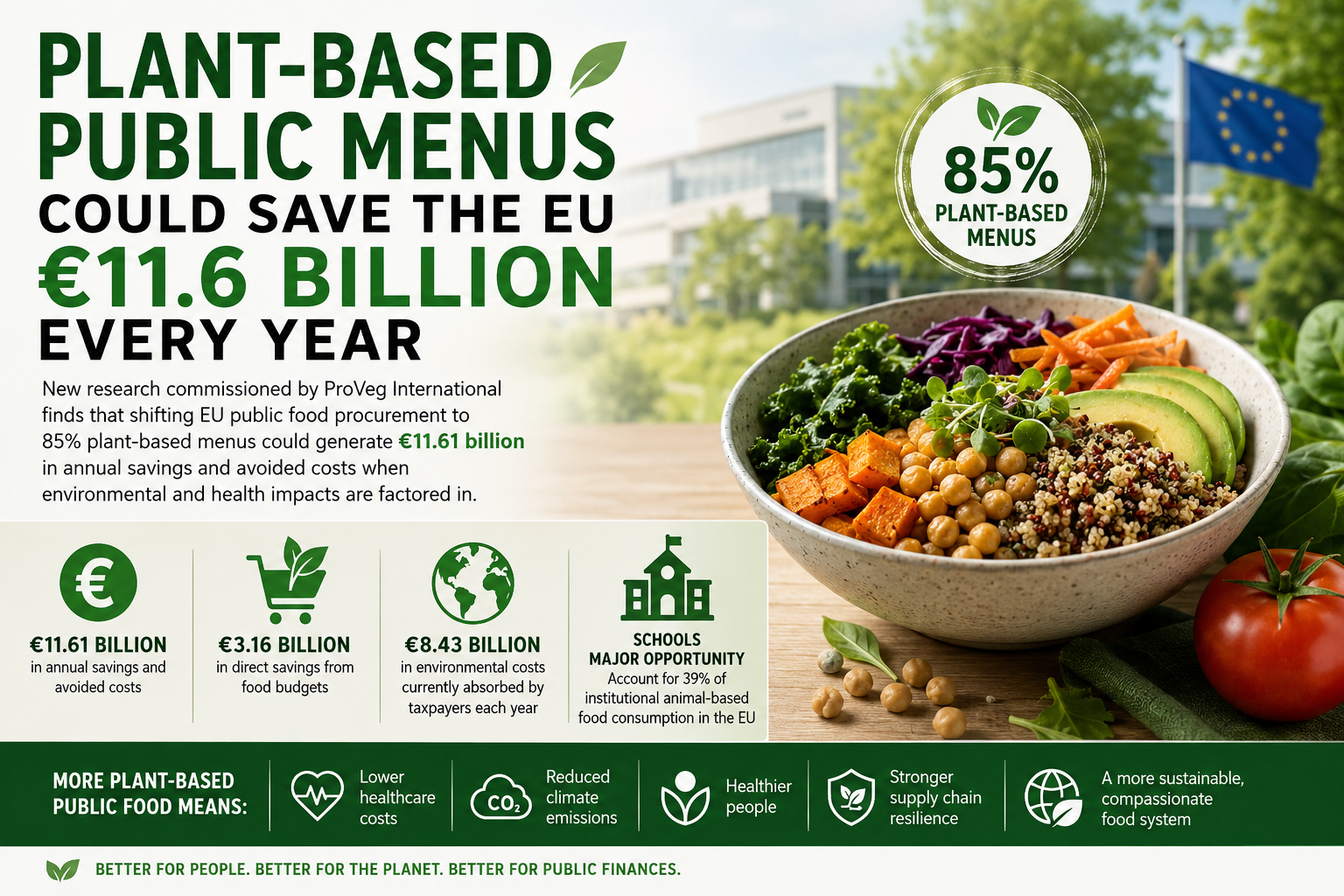
A new study commissioned by ProVeg International has found that shifting public food procurement across the European Union to 85% plant-based menus could save an estimated €11.61 billion annually when health and environmental costs are taken into account.
The report, The €11 Billion Opportunity: Unlocking the Economic Potential of Plant-Forward Public Procurement in the EU, was produced by Bryant Research and examines food served in schools, hospitals, universities, military facilities, and other public institutions across the EU’s 27 member states.
According to the findings, the EU currently spends more than €45 billion each year on public food procurement. However, existing food purchasing practices are estimated to generate €8.43 billion in environmental costs annually, including impacts linked to climate change, pollution, and public health, with these costs ultimately borne by taxpayers.
Jasmijn de Boo, Global CEO of ProVeg International, said:
“This is not a lifestyle debate, it is a fiscal and strategic one. Public procurement is one of Europe’s most overlooked climate and health tools. By shifting spending to 85% plant-based, the EU could save €3.16 billion directly from food budgets, and over €11 billion annually when environmental and health impacts are included.”
Schools Highlighted as Key Opportunity
The report identifies schools as one of the most effective places to introduce change. Schools account for approximately 39% of institutional animal-based food consumption across the EU, making them a powerful lever for improving both sustainability and public health.
Researchers suggest that healthier, plant-forward school meals could help reduce future obesity rates and contribute to better long-term health outcomes across the population.
A Timely Contribution to EU Policy Reform
The study comes as the European Commission prepares to revise the EU Public Procurement Directive, with proposals expected later in 2026. The review process is focused on strengthening sustainability requirements within public spending.
While current procurement rules already allow public bodies to increase plant-based options, the report argues that targeted legislative changes could help unlock much greater economic, environmental, and health benefits.
The research also highlights the role of plant-forward procurement in strengthening food system resilience. Reducing dependence on animal-based products could help protect public institutions from agricultural price volatility and supply chain disruptions, while supporting broader sustainability goals under the future Common Agricultural Policy (CAP) framework.
As de Boo concluded:
“Public food purchasing is preventative fiscal policy hiding in plain sight. Adjusting menu composition is one of the fastest ways governments can influence emissions, healthcare costs, and public spending at scale.”
The findings add to growing evidence that plant-based food policies can deliver significant benefits not only for human health and the environment, but also for public finances.
The Added Benefits of Vegan Organic Farming
The report focuses primarily on the economic, environmental and health benefits of increasing plant-based food procurement. However, sourcing more food from vegan organic farming systems could amplify many of these gains.
Vegan organic agriculture avoids both livestock production and animal-derived fertilisers, relying instead on crop rotations, green manures and composted plant materials to maintain soil fertility. This approach can help improve soil health, increase biodiversity, reduce water pollution and lower greenhouse gas emissions associated with both livestock farming and the manufacture of synthetic fertilisers.
Expanding the production of organic fruit, vegetables, legumes, grains and nuts for public institutions could also support healthier diets by increasing access to nutrient-rich, fibre-packed foods. Diets centred on whole plant foods have been linked to lower rates of obesity, heart disease, type 2 diabetes and certain cancers, helping to reduce pressure on healthcare systems while improving quality of life.
For organisations such as schools and hospitals, combining plant-based procurement with locally sourced vegan organic produce offers an opportunity to support farmers, protect ecosystems and promote public health at the same time. As governments seek cost-effective ways to meet climate, health and biodiversity targets, vegan organic farming provides a practical model for producing food in harmony with both people and the planet.