Theo Grent
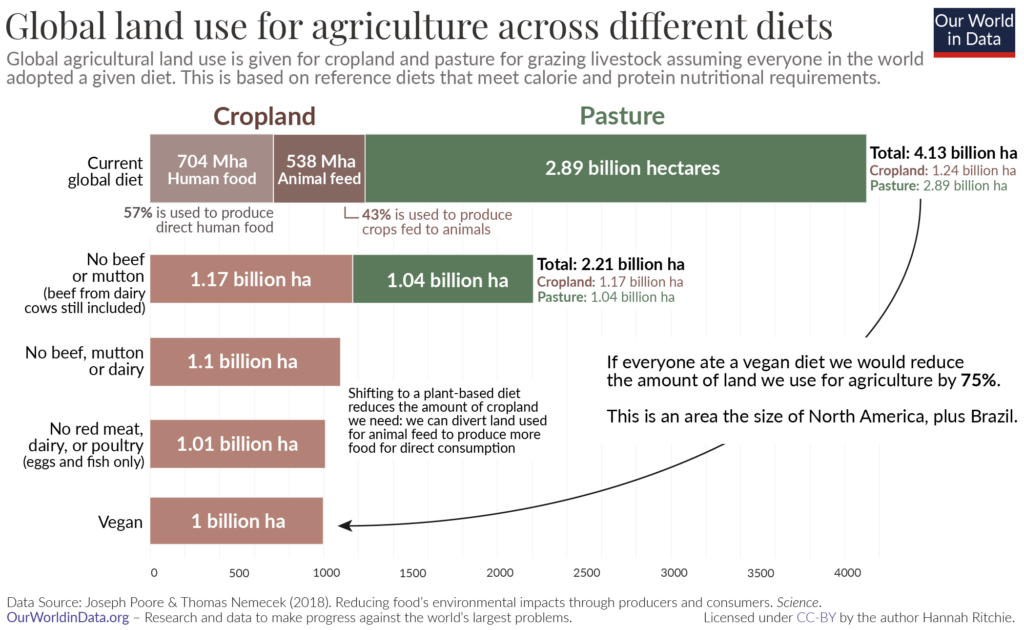
Critical thinking has always been a vital and energetic part of accepted theory and practice. Out of all the fields of agricultural and food production systems, vegan organic farming, perhaps along with public health, has the greatest potential for bringing together the diverse influences that shape health and wellbeing in our lives. For me a reformed agricultural and food production system will have the absence of animal exploitation at its heart, not only because this will improve consumer health, but because it will also improve planetary health.
We understand that science and knowledge are constructed by humans and so vulnerable to being shaped by the emotional attachments of those who have the power to tell us the scientific ‘truth’, based on their favourite theories. Within the existing theoretical framework (which we often refer to as a ‘paradigm’) a group of scientists sometimes throws up anomalies. In other words, results that do not fit with what the framework expects. These are usually ignored or explained away. However, a point is reached where the accumulation of those anomalies poses difficult questions for the current paradigm as they start to eat away at the viability and explanatory capacity of that paradigm. This eventually results in a crisis of confidence, and ultimately to revolution, where the dominant paradigm is discarded because it is unable to support the new findings.
But for a revolution to be successful it must replace, overthrow, or radically reform existing institutions that support and have a vested interest in maintaining the failed paradigm. This implies a period of uncertainty in which there is no clear authority and groups become divided in various camps, some defending the old institutions, others advocating for new ones, or significant reforms of the old ones. It is the point at which such polarisation occurs that revolution occurs, or the opposition is repressed (at least for a while), because there is no common language through which a debate can take place. This happens because the proponents of different paradigms are unable to understand each other’s point of view, as the shifts of meaning between old and new frameworks are so profound that the concepts employed by a new paradigm are simply inexpressible in the terms used by the pre-revolutionary one.
Did you follow that line of thinking? My observations of how accepted scientific truth changes led me to draw a comparison with how social change occurs. Science, it seems, is not immune to the social dynamics that afflicts an organised group of people. My use of the word ‘revolution’ to describe how one theoretical framework gets replaced by another, tells you that such change does not occur because of what science is telling you. A more human process is involved with power, hierarchy, and, in today’s world, money, all playing their part. Failed paradigms can stay dominant for long periods before a revolution is eventually successful.
The tension and conflicts such a revolution produces are unavoidable. Our agricultural and food production systems are now shaking with rumblings from its critics. Services and individuals who have rejected the current prominent paradigm are already operating in many places. Sections of service users and survivors of the system have organised and found voice raising objections that cannot be easily dismissed. These pockets of resistance will at some point create an unmovable critical mass. Change is coming. An earthquake is forming. We should be ready to embrace and help shape it in humane and enlightened directions, putting people’s real-life contexts at the centre of what we do. We can then become excited by how the next generation of critics will see the holes and problems in the new forms of practice we create.
The current dominant paradigm we use in agricultural and food practice is broken, empirically unsustainable, and so wrong that it’s dangerous to both our own and our planetary health. Scientifically and ethically it’s a failed paradigm. A paradigm shift for agricultural and food production systems is inevitable. The momentum that people, projects and organisations have created is gathering. Reason, truth, and ethics are all on the side of critics. We don’t know when enough of a critical mass will be reached. When it does, change can happen rapidly and a revolution will take place. We must be ready for it!
Theo Grent – Berlin, July 4th, 2022
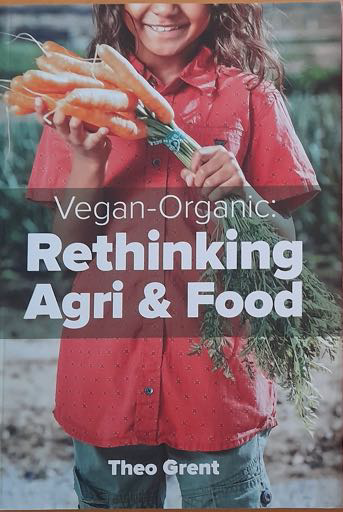
Theo is Ambassador of ‘Plenty Food’ (www.plentyfood.nl) and ‘biocyclic-vegan agriculture’ (www.biovegan.nl) and his ‘controlled distribution’ book ‘Vegan-Organic: Rethinking Agri & Food’ can be ordered at these websites, or by sending him an email.